Burnout is one of the few words in the language of work that has an official definition, an established scientific model and, in much of Europe, a legal duty attached to it. Almost none of those three things shows up in everyday discussion, which stays stuck on “switch off”, a piece of advice that is useless to anyone who can’t.
This article puts the three pieces together: what it is by definition, where it comes from according to the research, and which tools actually exist, legal ones included.
A necessary note. This is a general-interest article, not a clinical text. If you recognise yourself in the symptoms described, the useful thing to do is talk to a doctor or a psychologist, not read another guide.
What it is, by the official definition
The World Health Organization included burnout in ICD-11, the international classification of diseases, with a dedicated code. But with a qualification that changes everything and is routinely misreported:
Burnout is classified as an occupational phenomenon, not a medical condition. It refers specifically to the work context and should not be used to describe experiences in other areas of life.
Two concrete consequences. First: “burnout” is not a medical diagnosis, and a doctor examining you will use other categories (adjustment disorder, depressive episode, anxiety disorder) if there’s reason to. Second, and more important: the definition itself locates the cause in the work. Not in your resilience.
The WHO definition identifies three dimensions, useful for telling it apart from other things:
| Dimension | How it shows up | What it isn’t |
|---|---|---|
| Energy depletion | Tiredness that rest doesn’t repair | Not the tiredness of one intense week |
| Mental distance, negativism, cynicism about the job | Indifference toward things you used to care about | Not dislike of a manager or a project |
| Reduced professional efficacy | A persistent sense of finishing nothing | Not a stretch of weak results |
The practical criterion separating stress from burnout is recovery. Stress is a state of activation: it passes when the cause passes, and after a holiday you’re operational again. In burnout the holiday doesn’t repair anything. You come back after two weeks and within two days you’re where you were. If that has already happened to you, it’s the most informative signal you have.
Why it isn’t (only) about hours
Here’s the piece of research that dismantles the most common assumption.
Christina Maslach and Michael Leiter, authors of the Maslach Burnout Inventory (the most used measurement instrument in the literature), developed the six Areas of Worklife model. The central idea: burnout doesn’t come from the load as such, but from a mismatch between the person and the job in one or more of six areas.
| Area | The mismatch sounds like this |
|---|---|
| Workload | The volume is chronically above available resources |
| Control | You’re accountable for outcomes you don’t decide |
| Reward | No recognition, financial or symbolic |
| Community | Conflictual relationships or isolation |
| Fairness | The rules apply differently to different people |
| Values | You’re asked to do things you don’t believe in |
The figure that shifts the perspective: workload is only one of the six. And it’s common experience that the others weigh more: you can carry a very intense period if you have control, recognition and meaning; you can collapse on normal hours if you’re accountable for what you don’t govern, or if you perceive systematic unfairness.
That’s also why “rest more” often doesn’t work. If the problem is in fairness or values, rest doesn’t touch the cause. It treats the symptom of something else.
The picture is consistent with the demand-control model in occupational stress research: it’s high demands combined with low autonomy that produce the worst effects, not high demands on their own.
The piece almost nobody cites: it’s a legal duty
In Europe this isn’t optional corporate wellbeing.
The EU framework directive on safety and health at work, Directive 89/391/EEC, requires employers to evaluate the risks to workers’ safety and health, a duty transposed into national law across member states. In Italy, for example, Legislative Decree 81/2008 states at article 28 that the risk assessment must cover all risks to health and safety, including those connected to work-related stress, and the assessment has to be documented. INAIL, the national institute for workplace insurance, publishes a reference methodology combining objective indicators (absences, turnover, accidents, disciplinary proceedings) with a second-stage survey of workers’ perceptions.
Why this matters to you in practice:
- It gives you a legitimate question to ask: “how was work-related stress risk assessed in our risk assessment?”. That’s a technical question set out in a rule, not a complaint.
- It moves the topic from the personal to the organisational level, which is where the research says the cause sits.
- There are people to go to: the occupational physician and the workers’ safety representative have a specific role, and they aren’t hierarchical channels.
At European level, EU-OSHA, the EU agency for safety and health at work, treats psychosocial risks as a risk category in their own right, and its ESENER surveys have measured for years how widespread they are and how little they’re managed.
The signs, in the order they really appear
The order matters more than the list, because the first signs are the easiest to rationalise away.
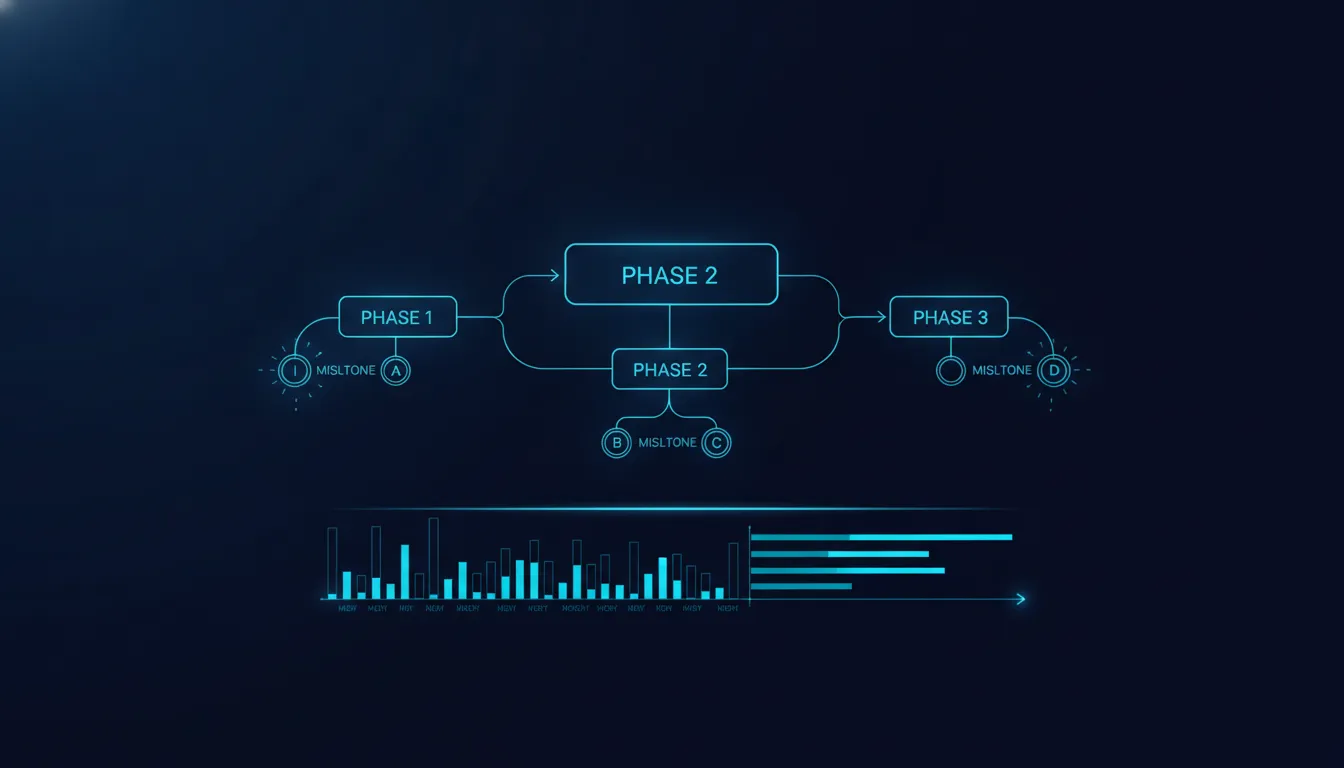
Phase 1: recovery gets shorter. The weekend is still enough, but barely. Sunday evening changes colour. This is the phase where intervening costs almost nothing, and the one everyone skips.
Phase 2: physical symptoms appear. Disturbed sleep, recurring headaches, muscle tension, gastrointestinal problems. Attributed to something else, systematically.
Phase 3: cynicism arrives. You notice you’re talking about colleagues, clients or users with a detachment you didn’t have before. In the literature this is the most specific dimension of burnout: it’s the one that least resembles ordinary tiredness.
Phase 4: efficacy drops and self-criticism grows. The same tasks take twice as long, and the explanation you give yourself is “I’m not capable any more”. That’s exactly the reading that makes asking for help hardest, and it has a lot in common with the mechanism described in impostor syndrome.
What can actually be done
I’ll split what depends on you from what doesn’t, because confusing the two is the main source of pointless guilt.
At the individual level, with the caveat that these are containment measures, not solutions:
- Set boundaries verifiably, not intentionally. Notifications off at a stated time is a rule; “I try to switch off” isn’t. This matters even more remotely, where the boundary doesn’t physically exist: some practical measures are in productive remote working.
- Protect sleep before anything else. It’s the one intervention that acts on every phase, and the first to be sacrificed.
- Reduce the decision load, not just the operational one. It’s often the hidden cost: some techniques are in time management.
- Write down what happens. Two weeks of short notes on what drained you turn a feeling into a list, and a list is the only form you can take into a conversation with your manager or a professional.
At the organisational level, which is where the real leverage sits: use the six-area model to identify which mismatch you have, and bring that. Asking for “more autonomy over deadlines” or “clarity on who decides what” is a negotiable request. “I’m exhausted” isn’t. Not because it isn’t true, but because it contains no action.
When it’s time to leave. From here on it’s my interpretation, flagged as such: if the mismatch is in values or fairness, and the structure doesn’t change, additional time served rarely improves anything. The other four areas can be negotiated; those two depend on how the organisation is built. If you’re at that point, the method for moving without deciding on impulse is in changing jobs.
Frequently asked questions
Is burnout recognised as an occupational disease? Not as such. The WHO classifies it as an occupational phenomenon, not a medical condition. Conditions linked to work-related stress can nonetheless have medico-legal relevance: that’s an assessment for a doctor and, on the insurance side, for the relevant national body (in Italy, INAIL).
How do I tell it apart from depression? You don’t, on your own, and that’s the honest answer. They overlap significantly and the distinction requires clinical assessment. One orienting but non-diagnostic clue: burnout tends to be confined to the work context, whereas a depressive episode extends to other areas.
Does taking leave help? It helps interrupt the exposure, not remove the cause. If you come back and within days you’re where you were, you’ve obtained important information: the problem is structural, and has to be addressed where it sits.
Is my employer obliged to do anything? To assess work-related stress risk, yes, by law across the EU (Directive 89/391/EEC as transposed nationally). How that assessment was conducted is a question you can put, including through the workers’ safety representative.
Does changing jobs fix it? If the mismatch was specific to that context, often yes. If it recurs across different contexts, it’s worth working out which of the six areas keeps coming back. Otherwise the risk is rebuilding the same situation elsewhere.
Sources
- World Health Organization. ICD-11: burnout as an occupational phenomenon, with the three dimensions (exhaustion, mental distance and cynicism, reduced professional efficacy).
- C. Maslach and M. P. Leiter. Maslach Burnout Inventory and the six Areas of Worklife model (workload, control, reward, community, fairness, values).
- R. Karasek. Demand-control model: combined effect of high demands and low decision latitude.
- Directive 89/391/EEC. EU framework duty on employers to assess risks to workers’ health and safety.
- Legislative Decree 81/2008, art. 28 (Italy). Risk assessment explicitly including work-related stress.
- INAIL. Reference methodology for assessing and managing work-related stress risk.
- EU-OSHA. Psychosocial risks at work and the ESENER surveys on their prevalence and management.
- Eurofound. European working conditions surveys on work intensity and autonomy.